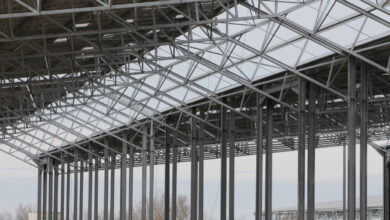

The Critical Balance in Building
The successful delivery of any architectural construction project hinges upon a delicate, constant, and highly professional balancing act. This balance involves the rigorous management of two crucial resources: Time and Budget. These two constraints are the non-negotiable, dual anchors of every construction endeavor, directly dictating project feasibility, quality of output, and the ultimate satisfaction of the client.
An elegantly designed building, no matter how structurally sound or aesthetically brilliant, is ultimately considered a failure if it arrives years late, incurring massive opportunity costs. It is also a failure if it significantly exceeds its pre-determined financial limits, potentially leading to disputes and project abandonment. Conversely, a project delivered cheaply and rapidly but lacking in fundamental quality or safety standards will cause severe long-term operational problems and diminish the architect’s professional reputation.
For the modern architect, mastering the principles of robust Project Management has become as vital and essential as mastering the principles of creative design and structural integrity. This complex discipline requires a proactive, systematic approach to work. It moves beyond simple reaction to crises and toward a sophisticated system of prediction, monitoring, and proactive control over the project’s development.
Achieving consistent project success demands meticulous planning from the earliest design stages of the project. It requires transparent and continuous communication with all stakeholders involved. It also necessitates the implementation of specific, reliable strategies to absorb the inevitable shocks and necessary changes that occur when translating abstract paper designs into a finished physical reality. This essential process involves utilizing advanced tools for scheduling, accurate cost estimation, and establishing strict contractual mechanisms for controlling every project change. By consistently treating time and money as integrated, equally precious resources, the entire project team can successfully navigate the inherent volatility of construction work, minimize financial risk, and consistently deliver structures that are both professionally executed and highly profitable for the firm.
The Foundation: Mastering Time Management
Effective time management in construction starts with a detailed, realistic schedule. This schedule must be built on a deep understanding of construction logic and task dependencies. It ensures the project progresses smoothly and predictably toward the final deadline.
Realistic Scheduling and Phasing
Creating a schedule that accurately reflects the complexity and necessary sequencing of construction tasks is the critical first step. This step is essential in managing the overall project duration successfully and responsibly. The project must first be broken down into a hierarchical list of manageable tasks and smaller subtasks. This essential Work Breakdown Structure (WBS) ensures that every single piece of work, no matter how small, is correctly accounted for in the overall plan and budget allocation.
The schedule must clearly define which tasks logically depend on the completion of others before they can begin. For example, the roof cannot be successfully installed until the main structural frame is complete, and interior finishes cannot begin until the building is completely weathertight and sealed. This step establishes the crucial Critical Path Method (CPM). Utilizing CPM is vital for identifying the single longest sequence of dependent activities that ultimately determines the earliest possible completion date of the project. Focusing management resources intently on these critical path tasks ensures the overall schedule remains on track and costly delays are minimized.
Proactive Risk and Delay Mitigation
Project delays are an almost unavoidable reality and an inherent risk in the construction industry. Success lies in proactively anticipating these potential issues and then strategically building buffer time into the initial project schedule. The schedule should not assume perfect working conditions but must explicitly include non-working time, known as floator contingency buffers, for potential delays. These delays could stem from severe weather, unexpected site conditions encountered, or delayed material delivery logistics. These buffers should be strategically placed at key points in the schedule.
The project team must immediately identify and order all long-lead materials, such as custom structural components, specialized elevators, or imported facade systems, as early as possible in the process. Delays in these few key items can entirely stop the entire project and incur massive costs. The construction manager must compare the actual progress achieved each week against the planned, documented schedule. Any discrepancy found must be immediately identified, precisely quantified, and addressed with a formal recovery plan before the delay can escalate beyond effective control.
Maintaining Momentum through Communication
Stalled project momentum is a silent killer of construction timelines and leads to predictable cost overruns. Consistent, structured communication and quick, documented decision-making are necessary to keep the project moving forward at the required pace. Mandatory, well-organized weekly site meetings involving the architect, contractor, client, and key consultants are essential for timely issue resolution and problem-solving. A clear agenda must be set and detailed documented minutes must be circulated to ensure all decisions are formally recorded and actioned promptly by the responsible party.
Requests for Information (RFIs) are the critical lifeblood of construction, but slow response times from the design team can halt site work entirely, wasting labor time. The architect must implement a formal protocol to answer all RFIs quickly and decisively, thereby maintaining the contractor’s necessary construction momentum. The client must be educated on the paramount importance of timely approvals for materials, finishes, and change orders. Delays in crucial client decision-making can be just as financially damaging to the construction schedule as poor contractor efficiency.
The Engine: Mastering Budget Management
Controlling the budget successfully requires far more than just checking invoices after they arrive. It involves strategic cost estimation, rigorous control mechanisms, and professional financial transparency from the project’s start to its finish.
Detailed Cost Estimation and Forecasting
The final project budget is initially defined during the design phase. Its fundamental accuracy is paramount to preventing catastrophic financial surprises for the client during the subsequent construction phase. Initial cost estimates should be based on robust historical data from similar, recently completed projects, a practice known as benchmarking. This method provides a reliable, data-driven starting point for the preliminary project budget and estimate.
Value Engineering (VE) is a strategic necessity. The architect must strategically analyze the design to ensure maximum functional utility and performance is achieved at the lowest possible cost without sacrificing the core design intent or quality standards. VE should be implemented as an ongoing, collaborative process throughout the design phase, not just at the end. Budget decisions should not only consider the immediate construction cost, or upfront capital expenditure. They must also consider the long-term operational and maintenance costs of the building over its entire expected lifespan, a process called Life Cycle Cost Analysis (LCCA). This ensures the client understands the true, total long-term financial commitment.
Financial Transparency and Contingency
Openness and honesty regarding project costs and the proactive establishment of dedicated funds for truly unforeseen circumstances are vital. These steps are critical for maintaining client trust and ensuring project solvency throughout the construction period. Where appropriate, using an open-book budgeting policy allows the client to directly see all contractor costs, material quotes, and labor rates. This high level of transparency promotes deep trust and justifies the total project cost more effectively than simply presenting a closed, fixed-price bid.
A mandatory contingency fund, typically 5%–10% of the construction budget, must be established at the outset of the project and clearly managed. This fund is exclusively reserved for unforeseen conditions or owner-requested changes that arise on site. It crucially prevents budget crises and client panic when unexpected costs inevitably arise during construction. The project manager must continuously track not just the costs incurred, meaning invoices already paid, but also the committed costs, meaning signed contracts and material purchase orders. This dual tracking provides a real-time, accurate forecast of the remaining budget availability at all times.
Managing Payments and Cash Flow
Ensuring the client pays the contractor on time and that the amounts are accurate is a fundamental project management duty. This is essential for maintaining smooth construction operations and avoiding costly legal disputes or work stoppages. The architect is professionally responsible for meticulously reviewing the contractor’s monthly payment applications and invoices. This detailed process verifies that the work claimed has actually been completed on site and that any stored materials have been properly delivered and adequately secured on the premises.
The architect must manage the legally required or contractually agreed-upon amount of money withheld from each payment, known as the retainage or holdback. This essential reserve ensures the contractor is financially incentivized to complete all final punch list items and all necessary warranty work after the main construction is finished. Clear, concise contract administration, timely decision-making, and objective verification of the work completed greatly reduce the risk of costly, time-consuming construction claims or legal disputes. These disputes are a major and unpredictable drain on the project budget and timeline.
Integration: Where Time and Budget Intersect

True project success is only achieved when scheduling and cost management are not treated as separate, isolated disciplines. Instead, they must be fully integrated into a single, cohesive decision-making and project control framework.
Controlling Changes (The Triple Constraint)
Every project change requested by the client or necessitated by site conditions impacts three critical elements: time, cost, and scope. This is the concept known as the Triple Constraint. Rigorously controlling these mandatory changes is often the single most challenging task for the entire project management team. Any deviation from the original, approved contract documents must trigger a mandatory, formal Change Order process. This ensures that no unauthorized work proceeds on site without written agreement on the modification, the precise cost implication, and the final schedule impact.
The architect must perform a thorough impact analysis for every requested change before presenting it to the client for approval. This analysis calculates the exact number of days added to the schedule and the precise financial increase or decrease to the contract sum. This provides the client with clear, objective trade-offs for their decision. The architect must proactively educate the client that a reduction in time, meaning requesting a faster schedule, almost always increases the project cost due to premium labor and overtime. This also often reduces the quality or final scope, highlighting the critical interdependency of the three constraints.
Utilizing Technology for Integrated Monitoring
Modern digital tools and software are now essential for integrating complex schedule data with current financial data. This provides a real-time, holistic, and unified view of the overall project health and trajectory. Building Information Modeling (BIM) is critical for advanced 4D Scheduling. This process links the 3D model geometry directly to the time component of the schedule. BIM is also vital for 5D Costing, linking every model component to precise cost data. This deep integration allows the team to visually track both physical progress and financial expenditures simultaneously against the detailed model.
The project manager should utilize centralized software dashboards that pull data from the schedule, cost tracking systems, and RFI logs into one easy-to-read, unified interface. This provides high-level, real-time insights for all key stakeholders. Advanced predictive analytics tools use accumulated project data to scientifically identify trends and predict potential future cost overruns or high delay risks before they fully materialize. This allows for proactive intervention and strategic management rather than merely reactive, costly problem-solving after a failure has occurred.
Negotiating and Contracting for Success
The contract is the fundamental legal framework that ultimately defines precisely how time and money will be managed and accounted for. This makes its negotiation a critical moment for establishing non-negotiable ground rules and accountability. The architect should advise the client on the pros and cons of different contract types available. A Lump Sum contract offers a fixed cost certainty but shifts the risk of unforeseen costs to the contractor, while a Cost-Pluscontract offers design flexibility but shifts all cost risk directly to the owner.
The contract may include a Liquidated Damages clause. This clause defines a pre-agreed financial penalty that the contractor must pay the owner for each day the project completion is delayed past the contractual date. This provides a clear, strong financial incentive for the contractor to stay strictly on schedule. Conversely, the contract can include Incentive Clauses that reward the contractor with a bonus payment for completing the project ahead of the agreed-upon, contractual schedule. This strategically aligns the financial interests of the client and the builder with a swift, efficient project delivery outcome.
Mitigating Inevitable Challenges
Despite the most meticulous planning, every construction project faces obstacles and unforeseen challenges. Effective management requires a robust, pre-defined strategy for dealing with personnel conflicts, material shortages, and external regulatory forces.
Managing Human Resources and Performance
Personnel issues, including internal conflicts, poor performance, and communication breakdowns, are frequently identified as the root cause of both cost overruns and significant schedule delays. The contract and initial meeting must clearly define the exact roles, responsibilities, and accountability of every principal team member: client, architect, contractor, and subconsultants. This clarity prevents confusion and avoids damaging blame-shifting when issues arise.
The contractor’s performance on both cost tracking and schedule adherence must be regularly and objectively assessed against contractual metrics. Identified underperformance should immediately trigger formal written warnings and, if necessary, activate defined contractual remedies. Holding mandatory, non-adversarial team alignment workshops early in the project helps align the entire team—designers, builders, and client—around the shared goals. This fosters a collaborative, problem-solving environment rather than a confrontational, risk-averse one.
Material and Supply Chain Volatility
Global markets and logistics complexity mean material cost and delivery dates are highly volatile and unpredictable. This demands proactive, comprehensive risk management strategies from the project team. Wherever possible, the contractor should secure fixed-price subcontracts and material quotes early in the process. This key action transfers the risk of material price escalation away from the owner and fixes a known cost into the budget.
The architect should always maintain a list of pre-vetted, approved alternative materials or manufacturers in the specifications. This provides a rapid, pre-approved replacement option should the primary specified item become suddenly unavailable or face severe, unexpected logistic delays. For critical, long-lead items, the contract may explicitly allow the owner to directly purchase and store the material early in the project. This action mitigates both price escalation risk and potential delivery delays by taking direct, financial control of the supply chain.
Regulatory and External Forces
External forces—such as sudden changes in governmental regulations, delayed governmental permits, or unexpected site access issues—must be actively tracked and managed within the project management framework. The architect must establish a clear, aggressive strategy for the permit submission process well in advance of the construction phase start date. Early, comprehensive submission of all required documents to the governing authorities reduces back-and-forth communication and significantly speeds up critical approval times.
The design team must continuously track potential or mandated changes to local building codes, zoning ordinances, or environmental regulations throughout the project’s long duration. Unforeseen regulatory shifts can trigger substantial redesign work and unavoidable cost increases. The contract must include a well-defined Force Majeure clause. This clause covers uncontrollable events like natural disasters, wars, or public health crises. It specifically outlines how time extensions and cost adjustments will be handled fairly under such extraordinary and rare circumstances.
Conclusion: Project Management Defines Value

The successful delivery of any architectural project is fundamentally defined by the project team’s disciplined and transparent mastery of the two critical, intertwined constraints: the financial budget and the construction schedule. Time and money are not merely limitations on design freedom but rather the integrated, essential metrics of professional success and project execution excellence. Achieving this success requires implementing a methodical, multi-layered approach to planning.
This begins with the meticulous establishment of a comprehensive Work Breakdown Structureand a realistic schedule that strategically utilizes the Critical Path Method to identify and prioritize essential tasks. The financial dimension demands not only accurate initial cost estimation but also the disciplined, continuous tracking of committed costs. This is paired with the professional necessity of establishing a non-negotiable Contingency Fund to absorb the inevitable, unpredictable shocks of unforeseen site conditions and client changes. The decisive moment of truth for the entire project team lies in rigorously managing inevitable change.
This change must always be processed through a formal Change Order protocol that clearly quantifies the exact impact on both the cost and the schedule before any physical work is allowed to proceed on site. By leveraging powerful digital tools like BIM for integrated 4D scheduling and 5D costing, and by fostering an environment of continuous, honest communication among all stakeholders, the architect shifts the focus from simply solving existing problems to proactively preventing them from occurring in the first place.
Ultimately, the architect who successfully and predictably manages both the clock and the bank account delivers far more than just a physical structure. They deliver reliability, build profound client trust, and provide proven, long-term financial value to their client and the entire community.