

Pillars of Civilization: A Timeless Legacy
The structures and ruins left behind by the ancient Greek and Roman civilizations are far more than mere archaeological remnants or visually appealing stone piles. They are the foundational, enduring blueprint upon which much of Western architectural and aesthetic thought is still fundamentally built and practiced today. For over two millennia, the principles established in Athens and Rome have served as the undisputed gold standard for architects, artists, and designers globally.
These foundational principles include concepts like strict symmetry, perfect proportion, absolute mathematical order, and the essential human scale. These architects sought to create buildings that would powerfully convey permanence, political power, and enduring democratic ideals to the populace. These classical concepts are specifically articulated through the rigorous, formal language of the Classical Orders, which include the Doric, Ionic, Corinthian, Tuscan, and Composite styles.
These principles transcend time, specific culture, and material changes in the construction industry. They are not merely ornamental flourishes applied to a surface. They represent a deep, intellectual, and completely systemic approach to organizing space and structure efficiently.
The enduring power of these ancient columns lies in their inherent ability to immediately communicate universal ideas of authority, stability, and rationality to the thoughtful observer. This language of form is so universally understood and respected that it has been selectively borrowed, extensively revived, and continuously reimagined countless times across multiple historical eras. This includes everything from the elegant Renaissance palazzi to the monumental, impressive public buildings of modern Washington D.C.
This detailed analysis will meticulously explore the profound, specific reasons why these millennia-old columns—and the precise mathematical principles that govern their meticulous design—remain critically and powerfully relevant in our contemporary, technologically advanced world today.
The Greek Orders: Geometry and Idealism
Classical Greek architecture, particularly during the flourishing Golden Age of Athens, was driven by an intense intellectual pursuit of perceived perfection, visual harmony, and an idealized representation of the human form. Their complex design language was primarily and formally expressed through three distinct, canonical architectural orders.
The Doric Order: Robust Simplicity
The Doric Order is recognized as the oldest, most foundational, and arguably the most structurally powerful of the canonical Greek orders. It is universally characterized by its austere appearance, robust simplicity, and unyielding visual strength and stability. It first officially emerged around the 7th century BC. It quickly became the definitive, defining feature of nearly all mainland Greek temples constructed thereafter.
Doric columns stand directly on the stylobate, which is the temple platform, entirely without any supporting base. This placement gives them a grounded, deeply rooted, and formidable appearance. The shaft typically features sharp, relatively shallow vertical grooves called fluting, which successfully add a strong sense of vertical rhythm and visual definition to the massive stone form. The capital, the section atop the shaft, is famously simple in its design. It consists merely of a plain square slab, known as the abacus, resting atop a simple, cushion-like, curved molding, called the echinus. This minimal, unadorned design powerfully conveys an immediate sense of stability, permanence, and unadorned strength.
The architectural section above the capital, known as the entablature, is distinctive for its use of alternating vertical panels, called triglyphs, and square, sculpted blocks, known as metopes. This intentional alternation provides a clear, repeating rhythm to the structure’s massive upper section. This strong, masculine order was often associated with the representation of the male form and unyielding military virtue in Greek philosophical thought.
The Ionic Order: Elegance and Volume
The Ionic Order developed slightly later in the historical timeline, primarily originating in the Aegean islands and the coastal region of Asia Minor. This order is noticeably more refined, significantly more slender, and visually more elegant than the stark Doric style that preceded it. It consciously introduced a strong sense of grace, flowing movement, and higher intellectual sophistication into the architectural vocabulary of the Greeks.
The signature, most recognizable feature of the Ionic order is its distinct capital. This capital is beautifully adorned with decorative, scroll-like spirals known universally as volutes. These elegant scrolls consciously suggest a softer, more decorative, and intellectual elegance compared to the stark, primitive Doric capital. Ionic columns are significantly more slender in their proportional design than the Doric columns. They also often stand on a decorative, circular molded base, giving the structure the distinct appearance of greater overall height and visual lightness.
The fluting on the Ionic shaft is typically deeper, which helps visually separate the column from its base and adds shadow definition. Crucially, the entablature of the Ionic order features a continuous band, known as the frieze. This allowed for uninterrupted narrative sculpture or continuous decorative motifs, marking a departure from the segmented, rhythmic blocks of the Doric style.
The Corinthian Order: Ornate Luxury
The Corinthian Order is recognized as the most complex, the most ornate, and often the most flamboyant and visually overwhelming of the original three Greek orders. Although it was undeniably developed by Greek architects, it was the subsequent Roman civilization that truly popularized and extensively employed its use in their monumental public structures.
The highly decorative capital is deeply and intricately carved with multiple rows of stylized acanthus leaves and small, subtle scrolls. This intricate detail was specifically intended to convey extreme opulence, immense richness, and high artistic virtuosity to the observer. Like the Ionic, the Corinthian column shaft is slender and rests on a detailed base. However, its visual effect is often even taller than the Ionic due to the added substantial height and the visual complexity of the large, elaborate capital.
The Corinthian capital provided the perfect vehicle for displaying immense, dedicated craftsmanship and detailed artistic skill in carving. This immense aesthetic appeal and visual impact led directly to its eventual, dominant use in Roman imperial architecture. In the Roman Empire, the powerful conveying of unparalleled grandeur, wealth, and sophisticated authority was always fundamentally paramount to the state’s message.
The Roman Influence: Adaption and Grandeur

The powerful Romans, while borrowing heavily and directly from the aesthetic and formal language of the Greeks, were simultaneously master structural engineers and pioneering innovators in construction materials. They expertly adapted the existing Greek orders, adding two unique variations of their own creation. This deliberate expansion allowed them to successfully create monumental, highly enduring public structures that characterized their vast empire.
The Tuscan and Composite Orders
The Romans formalized the extremely simple Tuscan Order and cleverly invented the highly elaborate Composite Order. This action demonstrates their continuous desire to both simplify and to synthesize, respectively, the classical vocabulary. These two new orders significantly expanded the usable classical toolkit for Roman architects.
The Tuscan Order is an extremely simplified, unadorned version of the original Doric. It is characterized by its complete lack of any fluting on the column shaft and features a very simple, circular base and an extremely plain capital. This order was favored for its robust, unadorned, and practical strength. It was often primarily used in military fortifications, functional structures, or non-public, utilitarian Roman buildings.
The Composite Order, as its insightful name explicitly suggests, is a literal combination of the best aesthetic parts of the Ionic and Corinthian orders. It expertly combines the elegant, scroll-like volutes of the Ionic capital with the rich, elaborate acanthus leaves of the Corinthian capital. This visual synthesis successfully created the most opulent, dramatic, and visually overwhelming column style in the entire classical lexicon. Crucially, Roman architects seamlessly integrated the use of columns into their innovative use of the arch and the vault. They often used columns decoratively, known as engaged columns, rather than purely structurally, demonstrating their ultimate engineering mastery over the Greek post-and-lintel system.
The Pursuit of Proportion and Symmetry
The critical, enduring relevance of the Roman architectural adaptation lies not just in the diverse column forms they created. It resides in the meticulous, almost obsessive application of precise mathematical relationships to every single part of the overall design. This rigorous attention to proportion and scale successfully established a truly human-centric scale for monumental architecture.
The famed Roman architect and theorist Vitruvius extensively documented all these foundational design principles in his monumental work, De Architectura. He powerfully argued that successful architectural design must always precisely mimic the perfect, natural proportions of the human body. This philosophical connection fundamentally linked architectural design directly to natural, universal, and divine law. Roman structures, ranging from the smallest, most simple temple to the largest, most complex basilica, were consistently designed along a strict, central axis of perfect symmetry. This rigid organizational structure powerfully conveyed immediate balance, absolute order, and immense state power to the population that sponsored the construction.
The exact dimensions of every column, its precise spacing, and its overall height were determined by a simple, repeating mathematical module. This rigorous, standardized, and repeatable system allowed for the construction of monumental-scale structures while consistently maintaining harmonious proportion and visual order across the entirety of the project.
Materials and Structural Innovation
While the founding Greeks primarily and heavily used pure marble for their fine carvings and construction, the Romans quickly became unsurpassed masters of concrete. This monumental material innovation successfully freed the column from its most restrictive structural duties. This fundamental shift irrevocably changed the core structural role of the column forever in history.
The Roman invention of Opus Caementicium, a waterproof, incredibly durable form of concrete, allowed them to create massive vaults, domes, and sophisticated arches. These structural forms were previously impossible to achieve with stone alone. This removed the absolute necessity of having columns internally shoulder the entire structural load of the building. The massive, unparalleled dome of the Roman Pantheon, constructed around 126 AD, is the ultimate, stunning demonstration of this concrete mastery. The structural weight of the dome is expertly transferred to the massive, thick walls, dramatically freeing up the vast interior space. With the primary structure handled by the new concrete walls, the Classical columns largely transformed into markers of immense status, conveyed wealth, and a crucial continuity with the esteemed intellectual traditions of Greek thought and the Imperial Roman power structure.
Enduring Relevance: Why The Orders Persist
The foundational principles originally codified by the Classical Orders have not disappeared from the architectural landscape. Instead, they have been continuously and selectively recycled, extensively revived, and artistically reinterpreted across nearly every significant cultural era since ancient antiquity.
The Renaissance Revival
The Renaissance era, spanning the 14th through 16th centuries, marked the first major, deliberate, and comprehensive revival of the Classical architectural principles. Architects during this cultural movement consciously looked back to the detailed writings of Vitruvius and the majestic ruins of Rome. They viewed these ancient remnants as the absolute pinnacle of human artistic achievement and pure rational design.
Renaissance architecture consistently prioritized clear, geometric shapes, rational spatial order, and the human scale in its creations. The architects viewed classical principles as the perfect, intellectual expression of the educated, humanist mind. The famed Venetian architect Andrea Palladio rigorously studied and meticulously documented the surviving Roman ruins. His highly influential book, The Four Books of Architecture, quickly became the definitive, authoritative guide for classical design across the entire Western world for several centuries. This architectural revival successfully led to the design of rational, perfectly symmetrical town squares and grand palazzi. This renewed focus restored a profound sense of formal organization, intellectual clarity, and civic pride to the growing European urban environment after the perceived chaos of the Middle Ages.
Neoclassicism and Political Power
The Neoclassical movement, which spanned the 18th and 19th centuries, saw the revival of Classical design elevated to a potent symbolic tool. It was used extensively for expressing burgeoning national identity, core republicanism, and democratic ideals during a period of massive political change. The founders of the United States, for instance, intentionally chose the Neoclassical style for their most important and visible public buildings. Examples include the White House and the Capitol Building. The adoption of the style powerfully symbolized the ideal of the Athenian democracy and the virtuous Roman republic they sought to emulate.
The prevalent use of grand, pedimented porticos and massive Ionic or Corinthian columns instantly and universally communicated ideas of stability, enduring gravity, and the unwavering authority of the state to its citizens. This architectural revival was witnessed globally across Europe, featuring in major structures like the British Museum and La Madeleine in Paris. It quickly became the universal, accepted language for all institutions of governance, high finance, and higher learning, persisting strongly well into the mid-20th century.
Function in the Modern Context
Even in the contemporary age of towering glass skyscrapers and geometrically complex deconstructivist architecture, the fundamental, enduring rules of the Classical Orders—proportion, formal balance, and consistent rhythm—continue to quietly dictate the parameters of successful modern design. Classical architects innately understood how to expertly manipulate architectural scale to make a building feel either intimate and inviting or imposing and monumental. Modern architects still regularly utilize classical bays, which is the traditional column spacing, and proportional division techniques. These techniques are used to effectively manage the complex visual scale of large, modern facades.
In highly complex, densely packed, and bustling urban centers, the stark, reassuring simplicity of a Doric column or the clear vertical rhythm of a classical facade provides essential, grounding visual anchoring. This visual connection instills a powerful sense of permanence amidst the constant, fleeting nature of contemporary design trends. While concrete or structural steel now primarily carries the massive weight load, the column itself powerfully persists as an enduring, universally recognized visual motif. It acts as an immediate reference point to history, instantly connecting any new, contemporary building to a continuous, unbroken architectural heritage spanning millennia.
Practical Legacy: Understanding the System
The true, lasting, and practical relevance of Classical Architecture does not strictly lie in simply copying the old forms directly onto new buildings. It lies, instead, in deeply understanding the sophisticated, transferable design system that the Greeks and Romans meticulously engineered and formalized.
The Mathematics of Beauty
Classical design is never arbitrary in its construction; it is always meticulously governed by complex mathematics. Specifically, it uses precise ratios and strict geometry. The ancients strongly believed that these mathematical rules created an inherent, universal sense of beauty that was naturally pleasing to the human eye. The Greeks extensively applied the Golden Ratio (Phi), approximately 1.618, to precisely determine the proportional relationships between the height, width, and depth of their massive temples and all the column elements. This specific ratio consciously creates a sense of natural, organic harmony and visual perfection.
To ingeniously counteract the known optical illusion that a perfectly straight column visually appears to slightly bow inward in the middle, Greek architects subtly tapered the column shaft. They simultaneously swelled it slightly in the middle, a technique known as entasis. This microscopic, intentional adjustment successfully ensured the building’s visual perfection and avoided any perceived deformation. These complex mathematical rules successfully created a comprehensive design system. In this system, the meticulous design of a small column capital dictated the dimensions of the massive roof structure above it, ensuring total, complete proportional harmony across the entire, unified structure.
Enduring Lessons for Urban Design
The highly organized planning of Roman cities and the Greek agoras offers profound, actionable, and vital lessons for contemporary urban planners. These planners are currently struggling with the complexities of modern density, traffic flow, and the continuous need for organized, accessible public space. Roman town planning was centrally focused on the precise crossing of two major, perpendicular roads, the Cardo and Decumanus. This simple organizational structure created an immediate, clear navigational order and city legibility that is still highly valued in complex modern urban environments today.
The concept of the forum (Roman) or the agora (Greek)—a large, organized public square meticulously surrounded by essential civic and religious buildings—stressed the vital, non-negotiable importance of formal, accessible public gathering spaces within a functional, healthy city. The incredible, lasting durability of Roman construction, which heavily relied on high-quality stone, fired brick, and highly durable concrete, serves as a powerful, ancient reminder. It teaches that material excellence and structural integrity are non-negotiable prerequisites for creating truly enduring, permanent, and functional civic architecture that will last for millennia.
Continuity and Cultural Memory
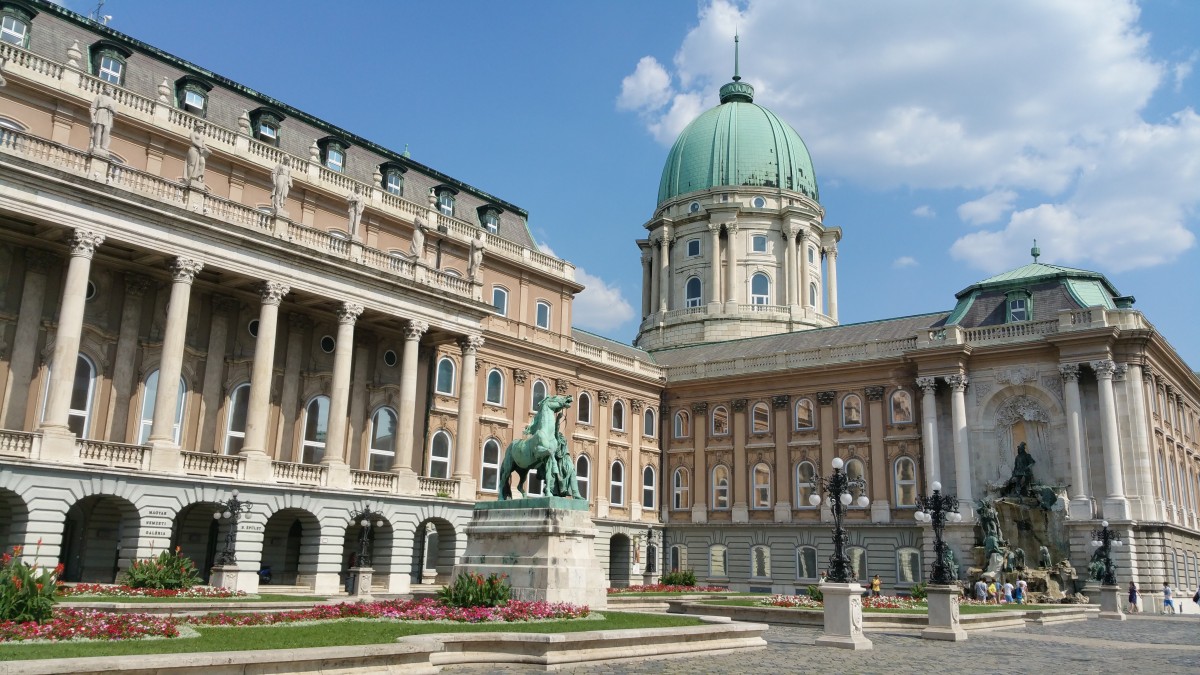
Ultimately, the Classical columns persist in our modern built environment because they function as a universal, immediately recognized visual language of deep cultural memory and clear institutional intent. They operate as a familiar, dependable visual signpost for the public. A modern building that intentionally utilizes a Corinthian capital instantly and universally signals its purpose to the observer—often indicating a civic, legal, or educational function. This visual language connects the new building directly to the long, inherited tradition of democracy, deep learning, and codified law first established in the classical world.
The symmetry, visual solidity, and formal order inherent in classical design deliberately evoke strong feelings of trust, stability, and reliability in the viewer. These specific emotional traits are highly desirable for institutions that seek public confidence, such as banks, respected museums, and official courts of law. Every time a contemporary, modern architect chooses to reinterpret the classical column, they consciously or unconsciously enter into a vital, ongoing dialogue with two thousand years of profound architectural history. This necessary dialogue ensures that the aesthetic lineage remains unbroken, continuously relevant, and deeply meaningful to global culture.
The foundational principles and forms articulated by the ancient Greek and Roman builders—especially the codified, formal structure of their columns—remain the essential, guiding foundation for architectural excellence globally. They powerfully teach us that true, enduring beauty is inextricably inseparable from precise mathematical proportion, pure rational order, and a deeply felt, profound respect for the essential human scale.